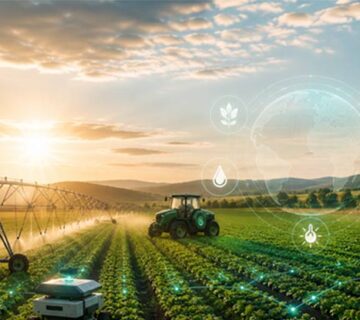
Agriculture has entered a new era where technology is becoming just as important as tractors, irrigation systems, and farming equipment. As the global population continues to grow and climate conditions become increasingly unpredictable, farmers are under greater pressure to produce higher-quality crops while reducing costs and protecting natural resources. This challenge has led to the rapid development of smart agriculture, a modern farming approach that combines digital technologies, automation, and real-time data to improve productivity and sustainability.
Smart agriculture, also known as intelligent farming or digital farming, integrates technologies such as the Internet of Things (IoT), artificial intelligence (AI), cloud computing, satellite imagery, GPS guidance, drones, robotics, and advanced sensors. These technologies enable farmers to monitor every aspect of their farms with remarkable precision, helping them make informed decisions based on accurate data rather than assumptions.
Unlike traditional farming methods that rely heavily on experience and manual observation, smart agriculture provides continuous insights into soil conditions, weather patterns, crop health, irrigation needs, and equipment performance. The result is higher efficiency, lower operational costs, and improved crop yields while minimizing environmental impact.
What Is Smart Agriculture?
Smart agriculture is the application of advanced digital technologies to farming operations. It focuses on collecting, analysing, and using agricultural data to optimise every stage of crop production.
Rather than treating an entire field the same way, smart agriculture allows farmers to manage different areas according to their specific needs. For example, one section of a field may require additional irrigation while another may already contain sufficient moisture. By understanding these differences, farmers can reduce unnecessary water usage and improve plant growth.
The main objective of smart agriculture is to make farming more productive, profitable, and environmentally sustainable.
Key Technologies Behind Smart Agriculture
Modern smart farms rely on several interconnected technologies.
Internet of Things (IoT)
IoT devices include sensors installed throughout fields, greenhouses, irrigation systems, and storage facilities. These sensors continuously collect valuable information such as:
- Soil moisture
- Soil temperature
- Air humidity
- Weather conditions
- Crop growth
- Water levels
- Equipment performance
The collected information is transmitted to cloud-based platforms where farmers can monitor their operations remotely using smartphones or computers.
Artificial Intelligence
Artificial intelligence transforms raw agricultural data into meaningful recommendations.
AI systems can identify crop diseases before visible symptoms appear, estimate future harvest volumes, detect pest infestations, recommend fertiliser schedules, and predict irrigation requirements.
Machine learning algorithms become increasingly accurate over time by analysing historical farming data alongside current environmental conditions.
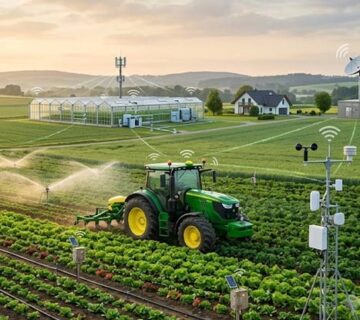
GPS and Precision Navigation
GPS technology allows agricultural machinery to operate with exceptional accuracy.
Modern tractors can automatically follow predefined routes, reducing overlap during planting, spraying, and harvesting. This minimises fuel consumption, decreases input waste, and improves field efficiency.
Precision guidance also reduces soil compaction because machinery consistently follows designated traffic lanes.
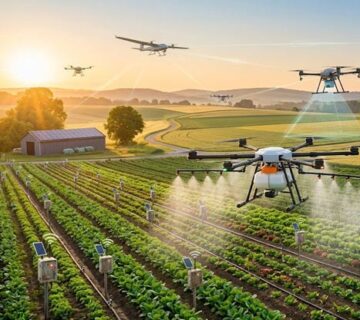
Agricultural Drones
Drones have become one of the most valuable tools in modern farming.
They provide high-resolution aerial images that reveal crop health across large fields within minutes.
Using multispectral cameras, drones can identify:
- Water stress
- Nutrient deficiencies
- Pest outbreaks
- Disease hotspots
- Uneven crop development
Farmers can address problems immediately before they spread across the entire field.
Cloud Computing
Cloud platforms centralise agricultural information collected from various devices.
Farm managers can access live farm data from anywhere, collaborate with agronomists, compare historical trends, and generate reports that support long-term planning.
Cloud systems also simplify data storage and backup while enabling software updates without replacing hardware.
Benefits of Smart Agriculture
The advantages of adopting smart agriculture extend far beyond increased production.
Improved Crop Yield
Continuous monitoring helps identify growth problems early, allowing corrective actions before crops suffer significant damage.
Better decision-making leads to healthier plants and higher harvest quality.
Efficient Water Management
Water scarcity is becoming a major concern worldwide.
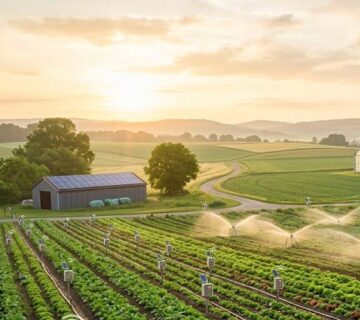
Smart irrigation systems use soil moisture sensors and weather forecasts to deliver water only when necessary.
This significantly reduces water consumption while maintaining optimal growing conditions.
Lower Production Costs
By applying fertilisers, pesticides, and irrigation precisely where required, farmers avoid unnecessary expenses.
Automation also reduces labour costs and increases operational efficiency.
Environmental Sustainability
Smart agriculture minimises chemical overuse and conserves valuable natural resources.
Reduced fertiliser runoff, improved water efficiency, and lower fuel consumption contribute to environmentally responsible farming practices.
Better Risk Management
Weather forecasts, predictive analytics, and disease detection systems help farmers prepare for potential threats before they become costly disasters.
Early intervention often prevents significant financial losses.
Smart Agriculture Applications
Smart agriculture can be implemented across nearly every farming sector.
Common applications include:
- Precision crop farming
- Greenhouse automation
- Smart irrigation systems
- Livestock monitoring
- Weather forecasting
- Pest detection
- Fertiliser optimisation
- Yield prediction
- Soil health monitoring
- Farm equipment tracking
These applications work together to improve productivity across the entire agricultural operation.
Challenges of Smart Agriculture
Although smart agriculture offers numerous benefits, several challenges remain.
Initial investment costs may be high, especially for small farms.
Reliable internet connectivity is essential for cloud-based systems, yet rural areas may experience limited network coverage.
Farmers also require training to understand and effectively use digital technologies.
Data security has become another important consideration as more agricultural information is stored online.
Despite these challenges, technology costs continue to decline while digital tools become increasingly user-friendly.
The Future of Smart Agriculture
The future of agriculture will become increasingly data-driven.
Emerging technologies such as autonomous tractors, robotic harvesting machines, AI-powered crop diagnosis, satellite monitoring, and digital twins are expected to transform farming even further.
Future farms may operate with minimal human intervention while maintaining exceptional productivity and sustainability.
As climate change, food demand, and resource limitations continue to influence agriculture, smart farming technologies will play an essential role in ensuring global food security.
Conclusion
Smart agriculture represents one of the most significant technological transformations in farming history. By combining IoT devices, artificial intelligence, drones, cloud computing, GPS guidance, and advanced analytics, farmers can make more accurate decisions that increase productivity while reducing costs and environmental impact.
Rather than replacing traditional farming knowledge, smart agriculture enhances it with real-time information and predictive insights. As technology continues to evolve, intelligent farming solutions will become increasingly accessible to farms of all sizes, helping agriculture become more sustainable, resilient, and capable of meeting the world’s growing food demands.
Frequently Asked Questions
What is smart agriculture?
Smart agriculture is the use of digital technologies such as IoT, AI, drones, and sensors to improve farming efficiency, productivity, and sustainability.
Why is smart agriculture important?
It helps farmers increase crop yields, reduce operational costs, conserve water, minimise environmental impact, and make better decisions through real-time data.
What technologies are used in smart agriculture?
Common technologies include IoT sensors, artificial intelligence, GPS guidance, drones, satellite imagery, robotics, cloud computing, and data analytics.
Can small farms benefit from smart agriculture?
Yes. Many affordable smart farming solutions are now available for small and medium-sized farms, allowing them to improve efficiency without major investments.
Is smart agriculture environmentally friendly?
Yes. Smart agriculture promotes efficient use of water, fertilisers, pesticides, and energy, helping reduce waste and protect natural ecosystems.


No comment