The agricultural industry is undergoing a major transformation as technology becomes increasingly integrated into farming practices. Traditional farming methods, which often depend on manual observation and experience, are being replaced by data-driven approaches that improve efficiency, productivity, and sustainability. One of the most important technologies driving this transformation is the Internet of Things (IoT).
IoT for smart farming refers to the use of connected devices, sensors, communication networks, and data analytics systems to monitor and manage agricultural activities. By collecting real-time information about soil conditions, weather, crops, and equipment performance, IoT enables farmers to make more accurate decisions and optimize resource usage.
As global challenges such as climate change, water shortages, and increasing food demand continue to grow, IoT-based farming solutions provide new opportunities to create a more efficient and sustainable agricultural system.
Understanding IoT in Smart Agriculture
The Internet of Things is a technology that allows physical devices to communicate and exchange data through the internet. In agriculture, IoT connects various farming tools and systems to create an intelligent network capable of monitoring and controlling different operations.
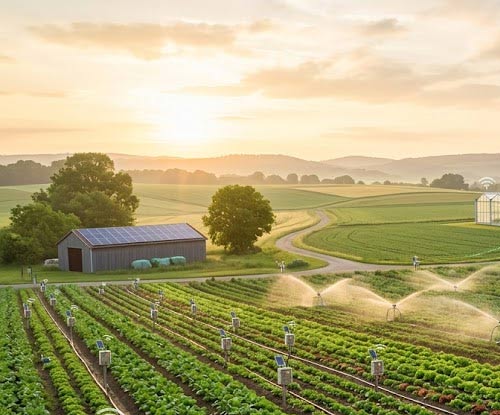
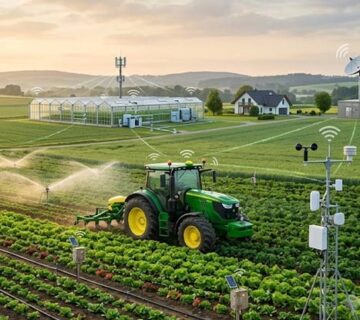
An IoT-based smart farm may include:
- Soil moisture sensors
- Weather monitoring stations
- Smart irrigation systems
- GPS-enabled machinery
- Livestock monitoring devices
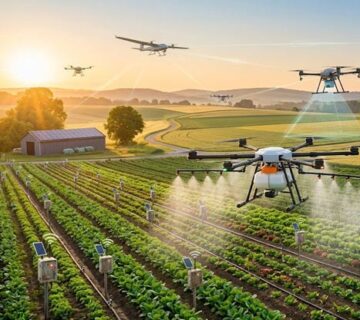
- Drone-based data collection systems
- Automated greenhouse controllers
These connected devices continuously collect information and send it to cloud-based platforms where the data can be analyzed.
Farmers can then access real-time insights through computers or mobile applications and make better decisions about crop management.
The Role of Sensors in Smart Farming
Sensors are one of the most important components of IoT agriculture systems. They collect valuable information from the farming environment and provide accurate data for decision-making.
Soil Monitoring Sensors
Soil sensors measure important factors such as:
- Moisture levels
- Temperature
- pH balance
- Nutrient availability
This information helps farmers understand the exact condition of their soil and apply water or fertilizers only when required.
For example, if soil moisture levels decrease below a specific threshold, an automated irrigation system can activate and provide the necessary amount of water.
Weather Monitoring Sensors
Weather conditions have a significant impact on agricultural productivity. IoT weather stations collect information about temperature, humidity, rainfall, wind speed, and other environmental factors.
Farmers can use this data to plan planting schedules, irrigation activities, and pest control strategies more effectively.
Smart Irrigation Through IoT
Water management is one of the most valuable applications of IoT in agriculture. Traditional irrigation systems often provide fixed amounts of water without considering actual crop requirements.
IoT-based irrigation systems use sensors and automated controllers to deliver water according to real-time conditions.
For example, when sensors detect dry soil, the system can automatically start irrigation. If rainfall is expected, irrigation can be postponed to prevent unnecessary water usage.
This technology helps farmers conserve water, reduce costs, and maintain healthier crops.
IoT and Precision Agriculture
Precision agriculture relies heavily on accurate data, and IoT provides the infrastructure needed to collect and analyze this information.
Instead of managing an entire farm as one uniform area, precision farming divides agricultural land into smaller sections with different requirements.
IoT devices help identify variations in:
- Soil quality
- Crop health
- Water needs
- Nutrient requirements
Farmers can then apply specific treatments to specific areas, improving efficiency and reducing waste.
This approach leads to higher productivity while minimizing environmental impact.
Livestock Monitoring with IoT
IoT technology is not limited to crop production. It is also transforming livestock farming.
Smart collars and wearable sensors can monitor animal health, movement, location, and behavior.
Farmers can receive alerts when animals show unusual activity, which may indicate illness or stress.
For example, changes in eating patterns or movement can help identify health problems before they become serious.
This allows farmers to improve animal welfare and reduce economic losses.
Cloud Computing and Data Analytics in IoT Farming
IoT devices generate large amounts of agricultural data. Cloud computing platforms store and process this information, allowing farmers to access valuable insights.
Advanced analytics tools can identify patterns and provide recommendations about:
- Crop growth
- Irrigation schedules
- Disease risks
- Equipment maintenance
Artificial intelligence can further improve IoT systems by predicting future conditions and automatically optimizing farming operations.
Benefits of IoT for Smart Farming
Improved Productivity
IoT technologies help farmers monitor crops more accurately and make better decisions. This results in improved crop growth and higher yields.
Resource Optimization
Smart farming systems reduce unnecessary usage of water, fertilizers, and pesticides by applying resources only when needed.
Reduced Labor Requirements
Automation allows many agricultural tasks to be performed with minimal human involvement, reducing labor demands.
Real-Time Monitoring
Farmers can monitor their fields remotely at any time and respond quickly to changing conditions.
Sustainable Agriculture
IoT supports environmentally friendly farming by reducing waste and promoting efficient resource management.
Challenges of IoT Adoption in Agriculture
Although IoT offers many benefits, several challenges must be addressed before widespread adoption.
The initial cost of installing sensors, communication systems, and smart equipment can be high, especially for small farmers.
Internet connectivity is another challenge. Many rural agricultural areas still lack reliable network infrastructure, limiting the effectiveness of IoT solutions.
Data security and privacy are also important concerns because smart farming systems collect large amounts of valuable agricultural information.
Farmers may also require training to understand and effectively use IoT technologies.
The Future of IoT-Based Farming
The future of smart agriculture will be strongly connected to IoT development. As sensors become cheaper, connectivity improves, and artificial intelligence becomes more advanced, IoT farming solutions will become more accessible.
Future smart farms may operate with highly automated systems where machines, sensors, drones, and AI platforms work together without constant human intervention.
IoT will continue to play a key role in creating sustainable agricultural systems capable of producing more food with fewer resources.
Conclusion
IoT for smart farming represents a significant step toward the future of agriculture. By connecting sensors, machines, and data platforms, IoT enables farmers to make smarter decisions and improve efficiency.
From intelligent irrigation and crop monitoring to livestock management and predictive analytics, IoT technologies are transforming traditional farming into a connected and intelligent industry.
As global agricultural challenges increase, IoT will become an essential technology for building sustainable, productive, and resilient farming systems.


No comment