

Agriculture has always depended on factors such as weather conditions, soil quality, water availability, and human experience. However, traditional farming methods often rely on generalized decisions that treat entire fields in the same way. This approach can lead to inefficient resource usage, unnecessary costs, and reduced productivity. With the rapid development of artificial intelligence (AI), precision farming has emerged as a revolutionary approach that enables farmers to make smarter, data-driven decisions.
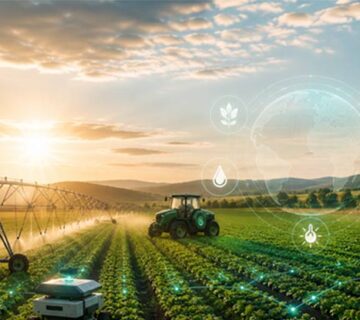
AI-powered precision farming combines advanced technologies such as machine learning, satellite imaging, Internet of Things (IoT) sensors, drones, and automated machinery to analyze agricultural data and optimize farming operations. Instead of applying the same treatment to every area of a farm, precision agriculture allows farmers to understand the specific needs of different sections of their fields.
This transformation is helping the agricultural sector address major global challenges, including climate change, increasing food demand, water scarcity, and the need for sustainable farming practices.
Understanding Precision Farming with Artificial Intelligence
Precision farming is an agricultural management strategy that focuses on observing, measuring, and responding to variations within crops and fields. AI enhances this concept by processing massive amounts of agricultural data and generating accurate predictions.
Artificial intelligence systems can analyze information collected from multiple sources, including soil sensors, weather stations, drones, and satellite images. By identifying patterns and trends, AI algorithms help farmers determine the best time for planting, irrigation, fertilization, and harvesting.
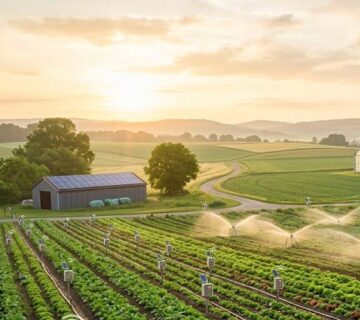
For example, instead of watering an entire field equally, AI-powered irrigation systems can identify areas with lower moisture levels and provide water only where it is needed. This reduces water waste while maintaining optimal crop growth.
The Role of Machine Learning in Smart Agriculture
Machine learning is one of the most important technologies behind AI-based precision farming. Machine learning models can learn from historical agricultural data and improve their predictions over time.
Farmers can use machine learning algorithms to predict crop yields, detect plant diseases, and identify potential risks before they become serious problems. These systems analyze environmental conditions, crop health indicators, and previous farming outcomes to provide recommendations.
For instance, an AI model can examine years of weather data and current climate conditions to predict possible drought risks. Farmers can then adjust their irrigation strategies and protect their crops from environmental stress.
Machine learning also helps optimize the use of fertilizers. Excessive fertilizer application can damage soil quality and increase environmental pollution. AI systems can analyze soil nutrient levels and recommend the exact amount of fertilizer required for different areas of a farm.
AI-Based Crop Monitoring and Disease Detection
One of the most valuable applications of artificial intelligence in precision farming is crop monitoring. Traditionally, farmers needed to manually inspect large agricultural areas to identify crop problems. This process was time-consuming and often ineffective.
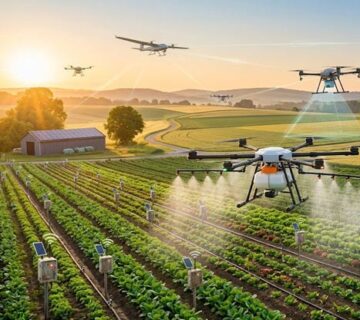
AI-powered drones and computer vision technologies can now scan fields and detect early signs of plant diseases, pest attacks, or nutrient deficiencies. High-resolution cameras capture images of crops, while AI algorithms analyze these images to identify abnormal patterns.
Early disease detection allows farmers to take immediate action before the problem spreads throughout the field. This reduces crop losses and decreases the need for excessive pesticide usage.
Computer vision systems can also monitor plant growth and evaluate crop development stages. This information helps farmers determine the ideal harvesting time, improving both productivity and product quality.
Smart Irrigation Systems Using AI
Water management is one of the biggest challenges in modern agriculture. Many regions around the world face water shortages, making efficient irrigation essential.
AI-driven irrigation systems use data from soil moisture sensors, weather forecasts, and crop conditions to determine the exact amount of water required. These systems can automatically adjust irrigation schedules based on real-time information.
For example, if weather forecasts predict rainfall, an AI system can reduce irrigation activity to prevent unnecessary water consumption. Similarly, during periods of high temperature, the system can increase watering frequency to protect crops.
This technology not only saves water but also reduces energy costs associated with pumping and irrigation operations.
Autonomous Farming Equipment and Robotics
Artificial intelligence is also transforming agricultural machinery. Autonomous tractors, robotic harvesters, and AI-controlled farming equipment are becoming increasingly common.
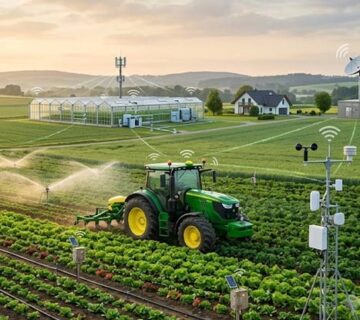
AI-powered machines can perform tasks such as planting seeds, removing weeds, spraying crops, and harvesting produce with minimal human intervention. These machines use sensors and navigation systems to operate accurately within fields.
Robotic farming equipment improves efficiency by completing repetitive tasks faster and with greater precision. It also helps address labor shortages in the agricultural industry.
Autonomous machines can work continuously and collect valuable data during operations. This data can later be analyzed to improve future farming decisions.
Benefits of AI in Precision Agriculture
The integration of artificial intelligence into farming provides numerous advantages:
Increased Productivity
AI helps farmers maximize crop production by optimizing every stage of the agricultural process. Better decisions regarding planting, irrigation, and fertilization lead to healthier crops and higher yields.
Reduced Resource Consumption
Precision farming minimizes waste by ensuring that water, fertilizers, and pesticides are used only where necessary. This creates a more sustainable agricultural system.
Improved Decision-Making
AI provides farmers with accurate insights based on real-time data rather than relying only on experience or assumptions.
Environmental Protection
By reducing chemical usage and improving resource efficiency, AI contributes to environmentally friendly farming practices.
Challenges of Implementing AI in Agriculture
Despite its benefits, AI-powered precision farming also faces several challenges. One major limitation is the high initial investment required for advanced equipment, sensors, and software systems.
Small-scale farmers may find it difficult to adopt AI technologies due to financial limitations. Additionally, successful implementation requires technical knowledge and access to reliable internet infrastructure.
Data privacy is another important concern. Agricultural data collected from farms must be properly managed and protected to prevent misuse.
The Future of AI-Driven Farming
The future of agriculture will increasingly depend on artificial intelligence and automation. As AI technologies become more affordable and accessible, more farmers will adopt smart farming solutions.
Future developments may include fully autonomous farms, advanced predictive models, and AI systems capable of managing entire agricultural operations. These innovations will help create a more efficient, sustainable, and resilient food production system.
Conclusion
AI-powered precision farming represents a major transformation in the agricultural industry. By combining artificial intelligence with modern farming technologies, farmers can produce more food while using fewer resources.
From intelligent irrigation and disease detection to autonomous machinery and predictive analytics, AI is creating new opportunities for sustainable agriculture. As global challenges continue to increase, precision farming with AI will play a critical role in building the future of food production.

No comment